High-level case study for collectors, insurers and specialist workshops
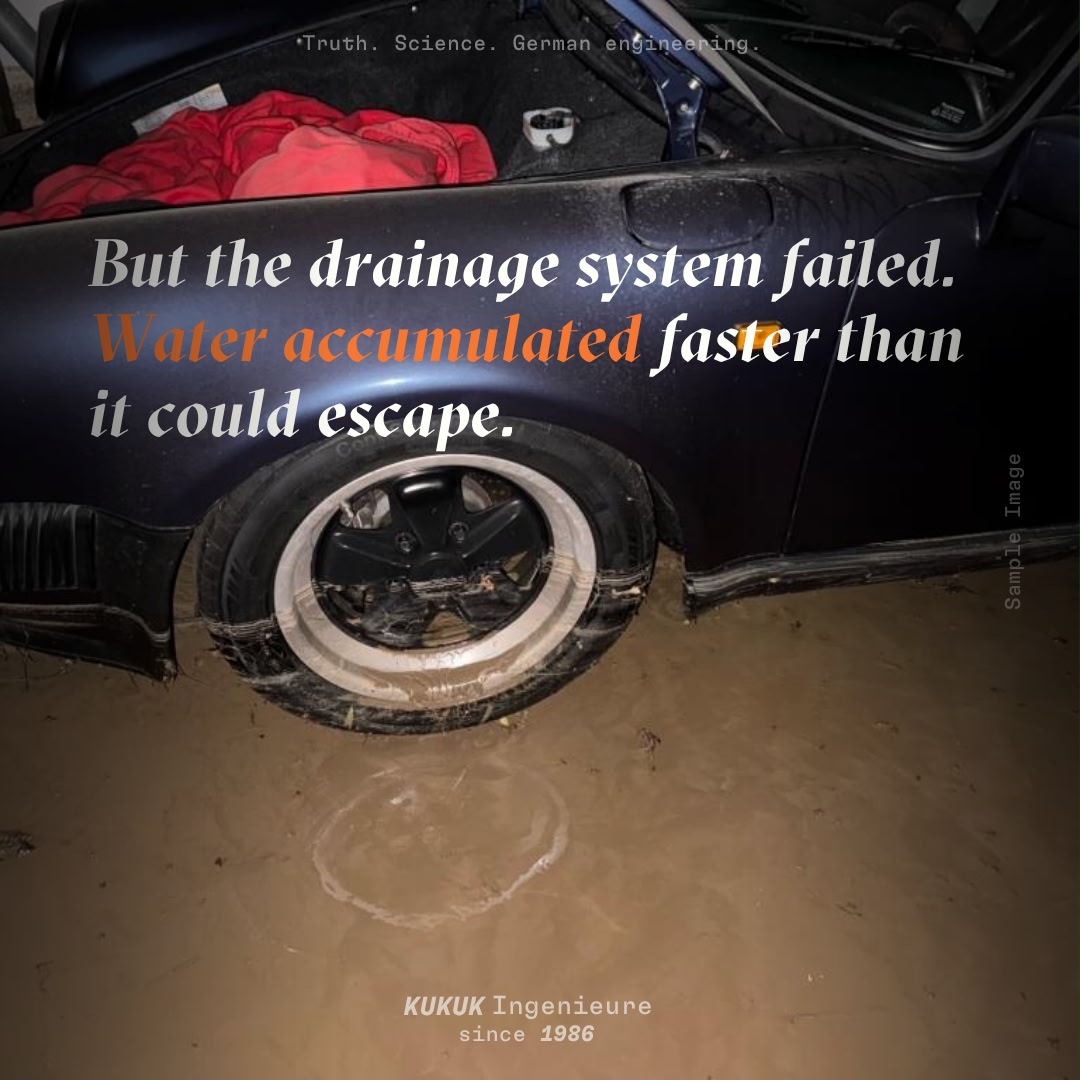
A Porsche stands in a private single garage, above the road level. No flooded basement, no obvious risk location, no dramatic scenario. At first glance, the situation seems controlled. Then comes heavy rain. Within a short time, more water accumulates than the drainage system can absorb. The water level rises faster than it drains, and a seemingly protected site becomes a relevant case of damage.
For owners of high-quality collector vehicles, this case is a precise example of why Damage assessment, initial technical assessment and coordinated immediate action must not only begin when visible consequential damage occurs. In the case of water damage at the Porsche often decides not only that water has penetrated. What matters is where it stood, which assemblies were affected and how quickly action was taken.
Water damage on Porsche? Don't start. First document, evaluate, coordinate.
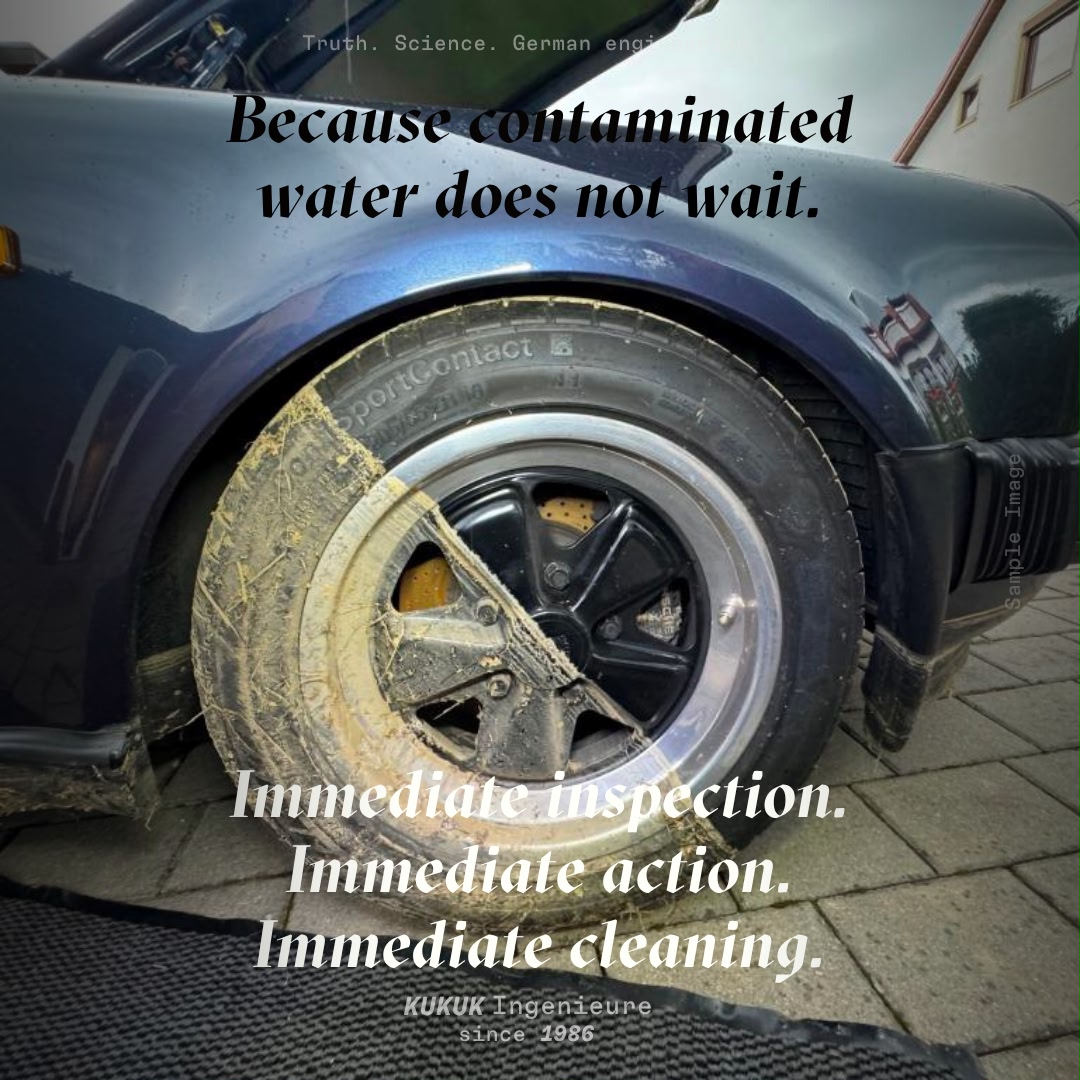
If water, sludge or contaminated moisture have reached a collector vehicle, the case needs a technical order: secure, photograph, determine water level, evaluate electronics, inform insurance and initiate appropriate technical measures.
Request damage caseWhat seems safe is not always technically safe
The Porsche was parked where many owners would consider their vehicle protected. It is precisely this starting point that makes the case instructive: risks do not only arise in places that are obviously at risk. Drainage, gradient, backwater, heavy rain intensity and local water management can also create a situation in private garages where water enters faster than it can drain.
For collector vehicles, this time period is critical. The earlier the technical assessment begins, the better secondary damage can be limited. A useful first step is the complete documentation of the condition before cleaning or disassembly work begins. Photos, waterlines, traces of dirt, smell, moisture in the carpet, seat consoles, cavities and electrical functions are important indications for later damage analysis.
Why the water level decides on the damage
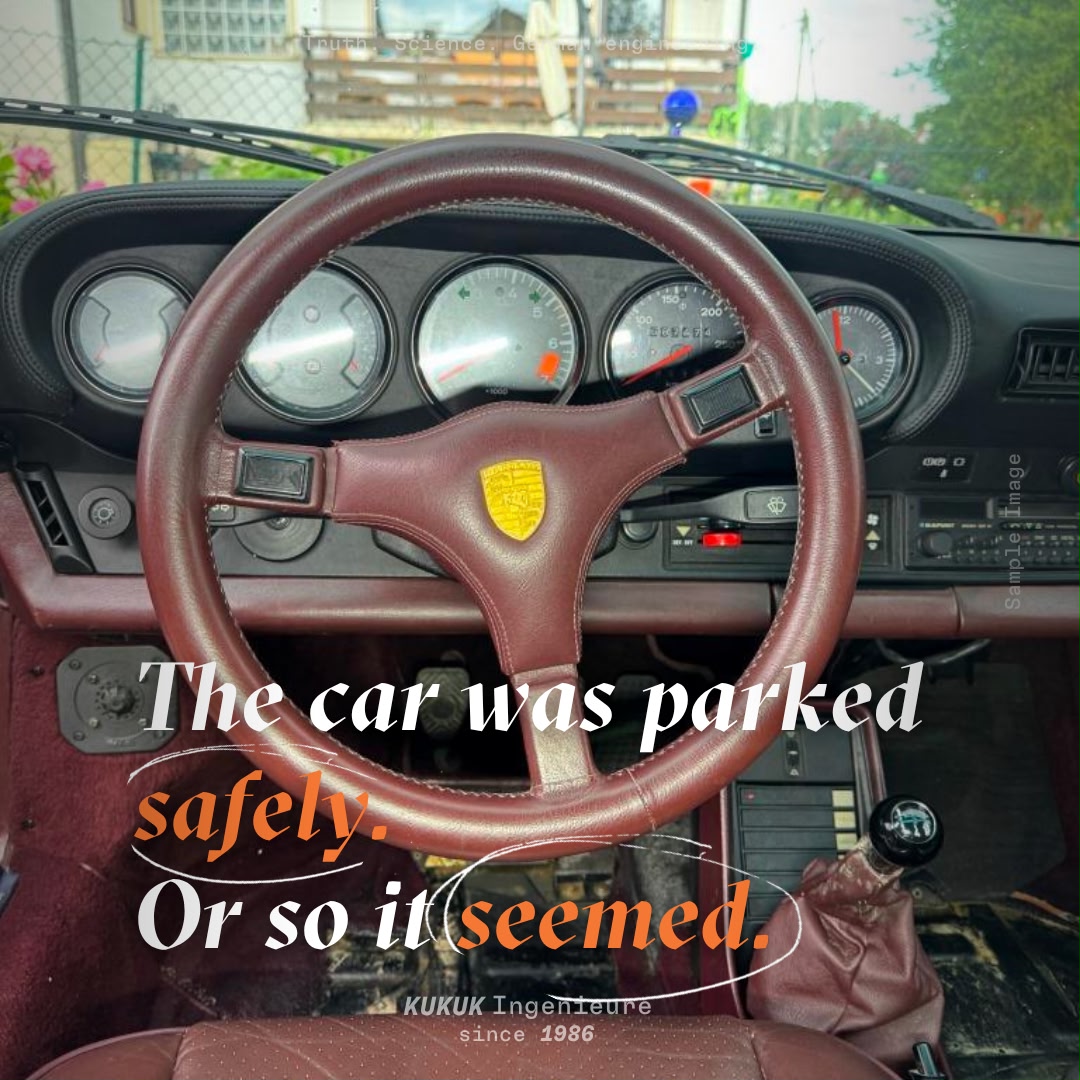
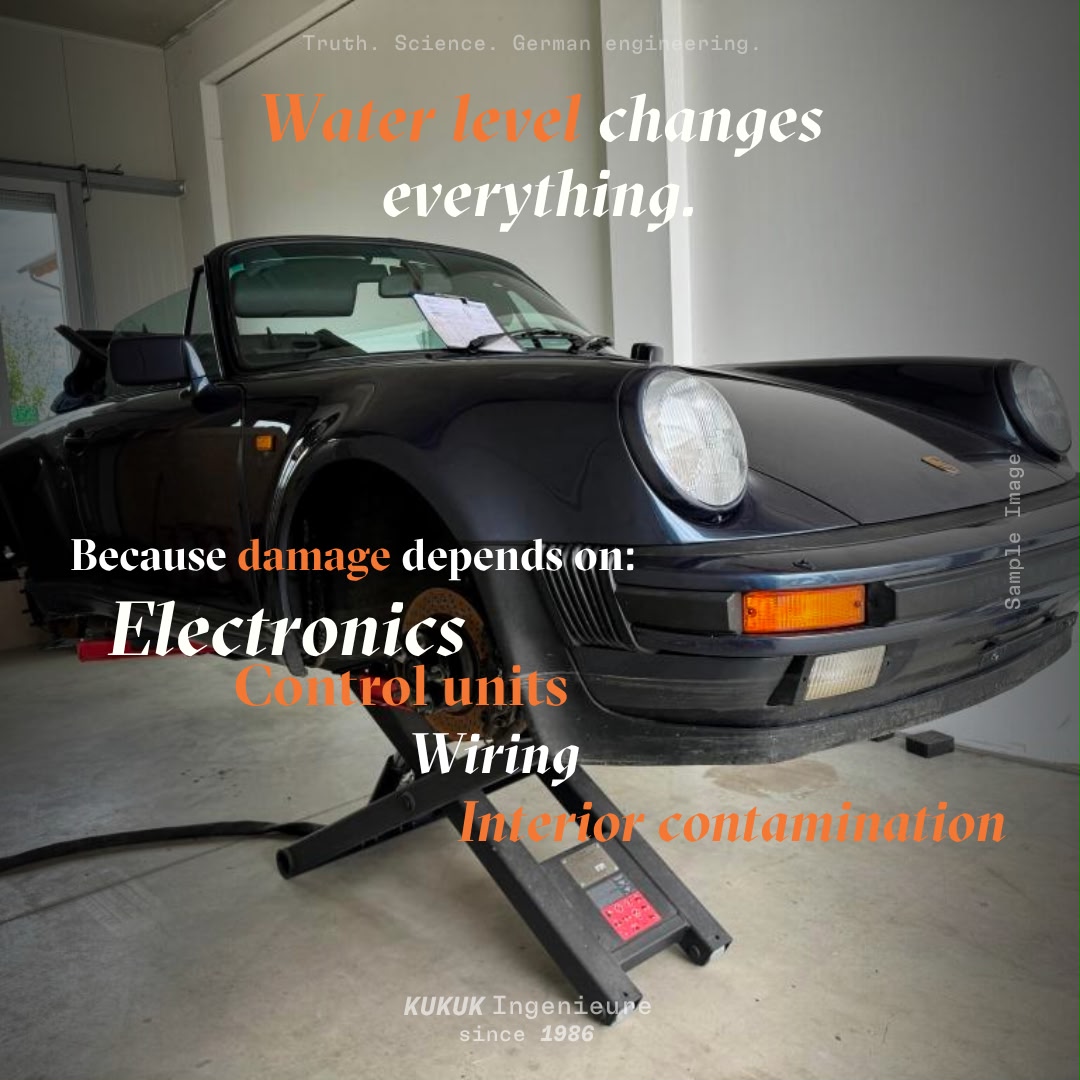
In the case of water damage to vintage cars, young cars and modern collector's vehicles, the water level is one of the most important technical information. A few centimeters can decide whether cleaning measures are sufficient or whether electronics, control units, cable harnesses, insulation material, seating mechanics and corrosion protection are affected.
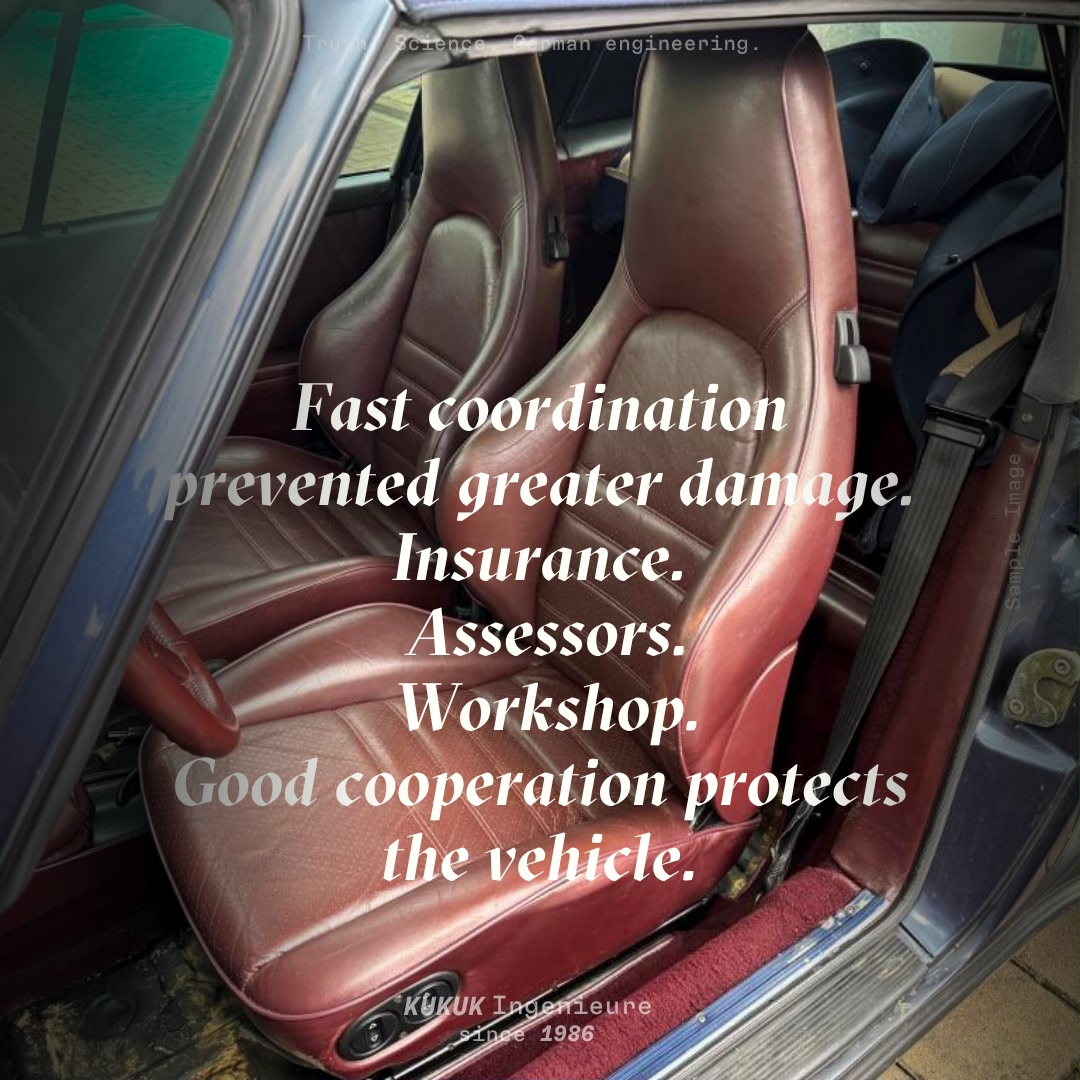
In the Porsche case, the focus of the technical assessment was on the question of which components the water had actually reached. Particularly relevant were control units in the area under the driver's seat. Polluted water can attack electrical contacts and electronic systems before failures in driving operations become visible. Corrosion often begins silently and develops further if moisture and contaminants are not consistently removed.
- Electronics: Control units, plug connections and sensors must be checked depending on the water level.
- Interior: Carpets, insulating materials, leather, seat rails and floor areas can retain moisture.
- Mechanics: Bearings, brakes, drive parts and underfloor areas react differently to contaminated water.
- Documentation: For insurance, workshop and keeper, a traceable technical chain of evidence counts.
Quick action limited the risk
After the technical assessment, the vehicle was transported to a suitable specialist workshop without unnecessary delay. There, cleaning, drying and safety measures could be initiated immediately. The goal was clear: remove contaminants, reduce moisture, stop corrosion processes and protect sensitive components before a long-term problem arises from limited damage.
This is where the economic and technical value of professional coordination arises. Water damage is not an isolated event. It concerns owners, insurance companies, experts, workshops and often later market value issues. KUKUK supports such cases with independent technical evaluation, Valuation expertise, damage analysis and professional classification for the next decisions.
Why cooperation in the event of damage is so important
In the case of water damage, technology is quickly talked about. Equally important, however, is coordination between all parties involved. Insurance companies need reliable information. Workshops need clear technical prioritization. Holders need orientation, which measures are urgent and which should follow only after the first securing.
When evaluation, communication and implementation are integrated at an early stage, technical risks, unnecessary costs and avoidable delays can be reduced. This is especially true for high-quality collector vehicles, where original substance, history, market value and repair route must be considered together. Anyone who wants to professionally secure a purchase, a collection or a claim will find further orientation in the KUKUK purchase advice, which Use cases and the overview of Benefits.
The most important insight
This Porsche was not in an obviously vulnerable area. Nevertheless, a relevant damage case arose within a short time. The central lesson is: In the case of water damage, not only the event itself decides. Crucial are the speed of the evaluation, the quality of the technical analysis and the right measures in the first few hours.
Clarity through facts. Decisions based on expertise.
FAQ on Porsche water damage
What to do first after a water damage at the Porsche?
The vehicle should not be moved or started unnecessarily. Crucial are fast documentation, initial technical assessment, determination of the water level and coordination with insurance, experts and workshop.
Why is contaminated water critical in collector vehicles?
Contaminated water can attack electronics, control devices, cable trees, carpets, insulation materials and mechanical areas. Corrosion and odor development often begin before the damage is fully visible.
When does a water damage need an independent assessment?
An independent technical report makes sense if value, cause, extent of damage, repair path, impairment or insurance decision must be clarified in a reliable manner.