Water damage to a historic vehicle is rarely just a cleaning problem. The decisive factor is not only whether water has penetrated, but how far it has come, which materials are affected and whether technical systems, voids or structurally relevant areas have already been contaminated.
In the case of collector vehicles, precisely this early classification can decide on consequential damage, repair strategy, insurance documentation and value preservation.
The waterline is an indication. It is not yet an expert opinion.
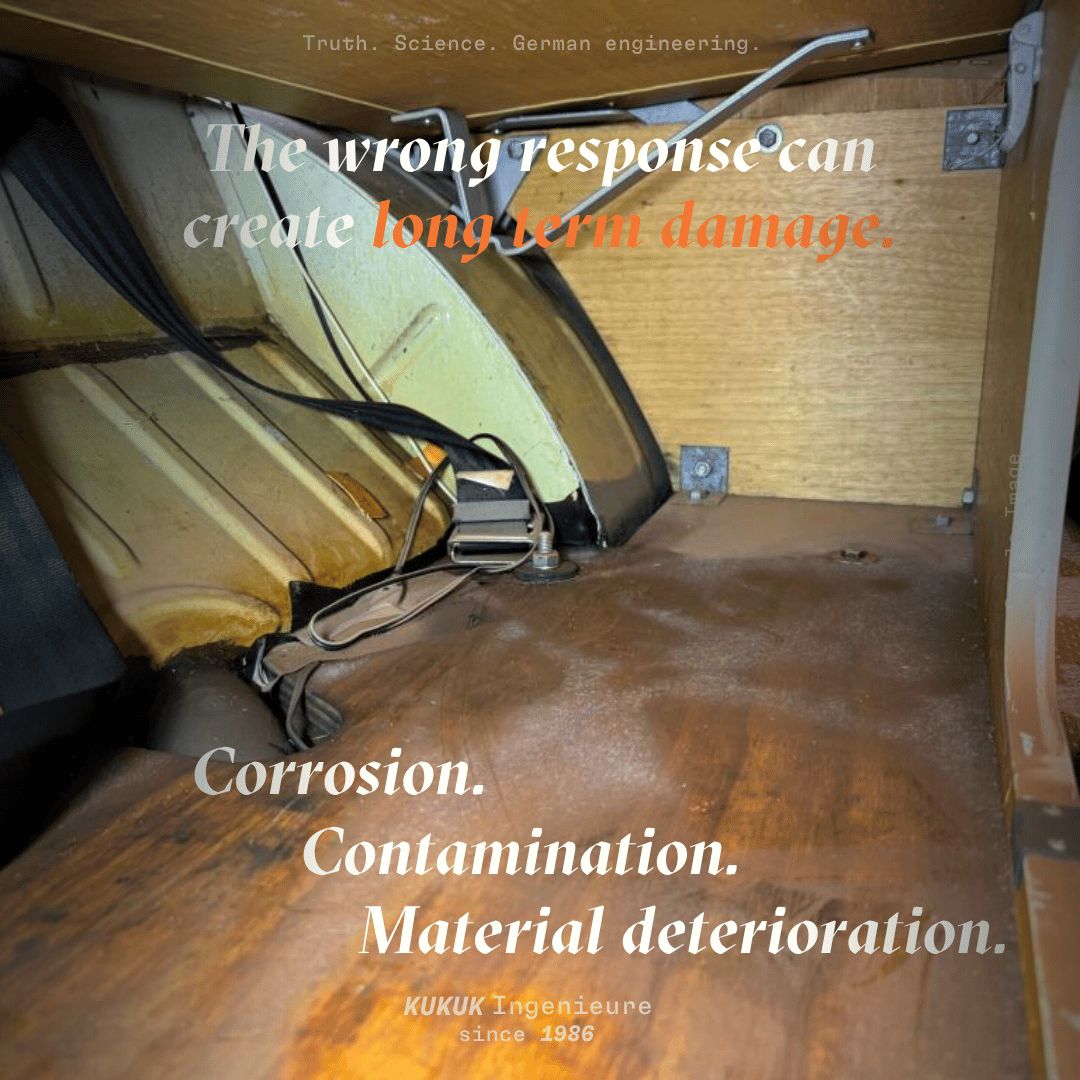
The wrong first reaction can create long-term damage.
Historic vehicles are not just about drying. It is about corrosion, contamination, material change, lubricants, voids and robust documentation for owners, insurers and later decisions.
Technical assessment of damageThe case: Volkswagen T2 Westfalia after flooding
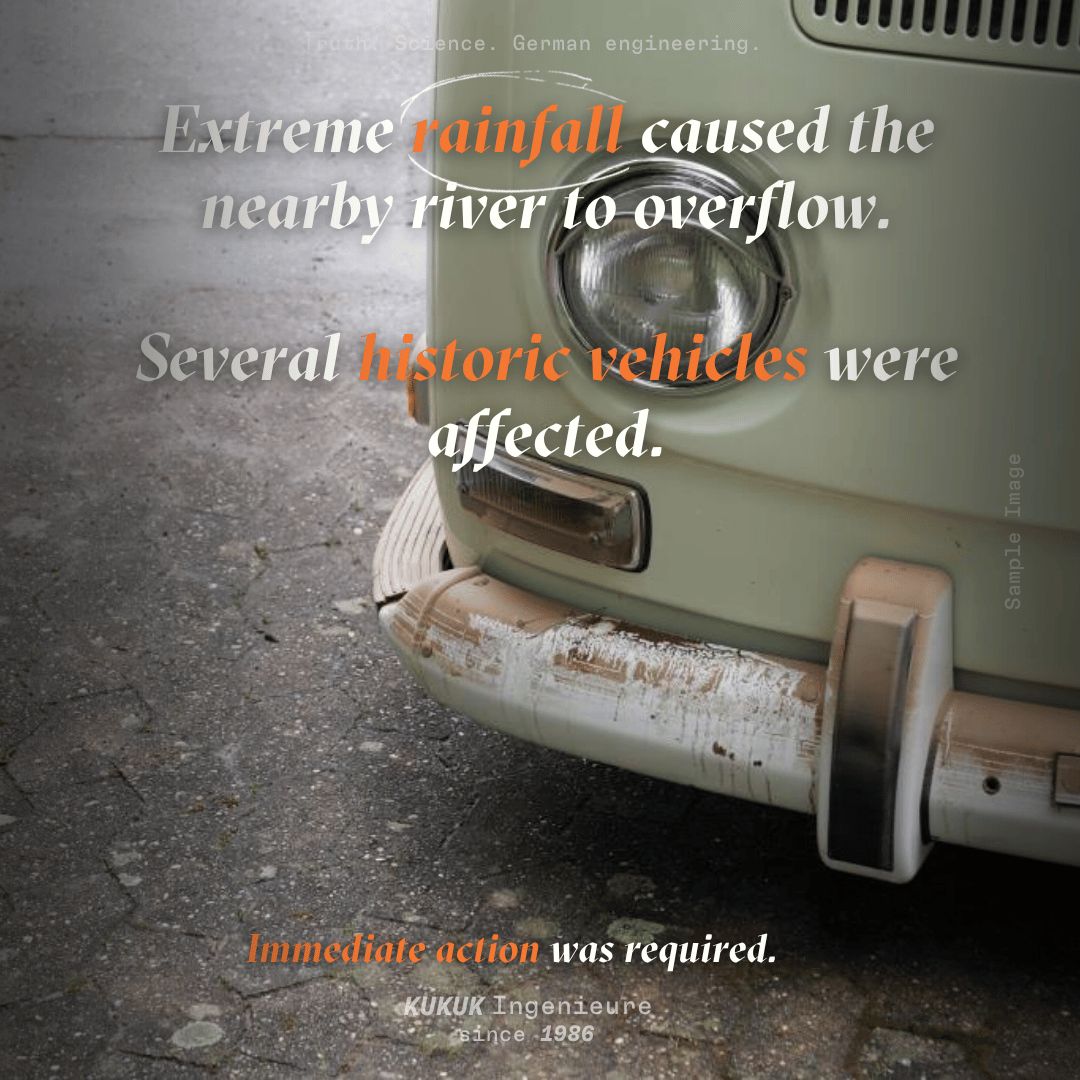
After extreme rainfall, a nearby river overflowed and put a hall of several historic vehicles under water. Among the affected vehicles was a Volkswagen T2 Westfalia.
At first glance, the situation seemed clear: water in the vehicle, dirty surfaces, wet interior areas. The obvious reaction would have been cleaning, drying and transfer to a workshop.
In a historical Westfalia, however, this view falls short. The construction includes moisture-sensitive indoor materials, wood-based elements, concealed areas, cladding, voids and hard-to-access structures. Water can remain there much longer than the visible surface suggests.

Why the waterline alone is not enough
The height of the water inlet is an important indication in the event of flood damage. However, it does not automatically say which components are safely affected or unaffected. Initially, it only shows which areas need to be examined technically.
In this case, the water level suggested that the load could have extended beyond the visible interior. Potential tests included:
- chassis and ground-level structural zones,
- cavities, creases, overlaps and areas of bodywork which are difficult to access,
- gearbox, engine, accessories and exhaust system,
- wood-based and textile interior materials,
- electrical and mechanical components in the affected area.
The real risks often begin invisibly
In historic vehicles, the critical part of the damage often occurs where a superficial visual inspection has little significance. Moisture remains in cavities, under coverings, behind linings or in material transitions.
Corrosion does not start until it becomes visible. Wood-based materials can swell, delaminate or be microbial loaded. Lubricants and technical liquids can be affected by water or dirt.
For the evaluation, it is therefore not decisive whether the interior looks dry after a short time. The decisive factor is whether the claim chain has been technically understood, documented and limited.
Observation, interpretation, conclusion
| Observation | A historic Volkswagen T2 Westfalia was affected after flooding in a flooded hall. Water-related traces and indoor pollution were visible. |
|---|---|
| Technical interpretation | The water height and design of the vehicle required testing beyond the visible interior: cavities, chassis, propulsion, exhaust system and moisture-sensitive interior materials. |
| Reliable conclusion | The case could not be treated as a pure cleaning or drying task. It required structured technical damage recording. |
| Next step | Documented damage recording, prioritization of immediate measures, selection of a suitable specialist workshop and comprehensible technical support for further work. |
Why fast technical damage recording is crucial
Speed alone does not solve water damage. The right speed does it: first classify technically, then act specifically.
- selection of a suitable special workshop,
- definition of a clear technical scope of work,
- prioritization of urgent drying, securing and disassembly steps,
- systematic limitation of possible consequential damage,
- better basis for documentation, insurance and further decisions.
What should be checked in case of water damage on the classic car
A serious damage assessment does not begin with a blanket diagnosis, but with a structured examination. Depending on the vehicle, water level, duration of exposure and combination of materials, the following points may be relevant:
- documentation of the water level and duration of exposure, where applicable;
- visual inspection of the interior, underbody, creases, openings and drains,
- endoscopic testing of hard-to-access voids, where technically appropriate,
- corrosion test, residues, sludge, salts or organic loads,
- assessment of wood, textiles, insulation materials and fairing parts,
- Inspection of engine, transmission, differential and lubricants if any concern is plausible;
- evaluation of electrical components and connectors in the affected area,
- Photo documentation and comprehensible recommendations for action.
Why independent documentation makes a difference
After a flooding event, several interests often meet: owner, insurance, workshop, buyer, seller or legal representative. In this situation, a general assessment is rarely enough.
An independent technical damage assessment creates an orderly basis. It describes the visible result, limits uncertainties, explains technical risks and documents which measures are recommended and why.
FAQ
What to do first in case of water damage to the classic car?
First, the condition should be documented and technically classified. Visible wetness, waterline, exposure time and affected areas should be recorded photographically. After that, drying, disassembly and workshop measures should be technically planned.
Why is water damage particularly critical in historic vehicles?
Historic vehicles often contain materials, constructions and voids that are sensitive to humidity. Corrosion, contamination and material changes can occur with a time delay.
Is cleaning after flooding enough?
A cleaning can be part of the measures, but does not replace a technical assessment. The decisive factor is whether water or residues have entered cavities, drive components, electrical areas or moisture-sensitive materials.
Which components must be tested?
Depending on the water level and vehicle, chassis, voids, interior, wood and textile materials, engine, transmission, exhaust system, electrical components and lubricants may be relevant.
When does an independent injury assessment make sense?
If the damage has to be assessed technically, insurance-related, purchase-relevant or biased. An expert opinion helps to document observation, interpretation and recommended measures in a comprehensible manner.