Ultrasound, borescope or CT?
Ultrasound, borescope inspection and computed tomography answer different questions. The method should match the component, material, suspected defect, access and the decision a buyer, owner, restorer or insurer needs to make.
No single method proves that an entire collector vehicle is damage free or original. A defensible conclusion requires a defined scope, appropriate equipment, expert interpretation and comparison with the physical vehicle and its records.
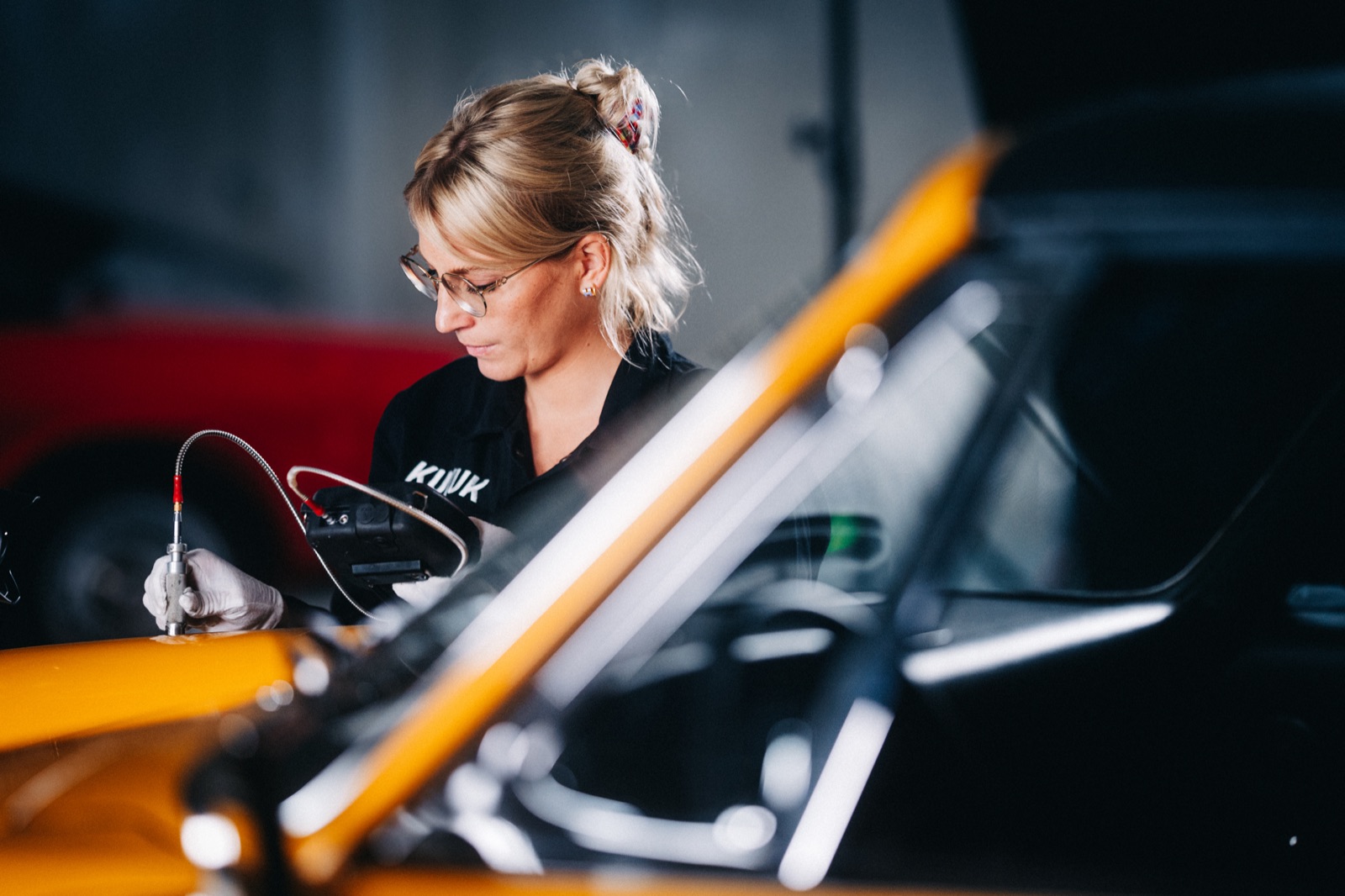
What can each method show?
| Method | Useful question | Possible finding | Important limit |
|---|---|---|---|
| Ultrasound | Are there internal indications in a suitable material? | Indications of separation, voids or changes in the sound path | Geometry, surface, calibration and reference affect the result |
| Borescope inspection | What is visible inside a hard to reach cavity? | Visible corrosion, deposits, tooling marks or foreign objects | Only reachable and illuminated surfaces are visible |
| Computed tomography | How is a suitable component structured internally? | Spatial representation of internal structure and deviations | Component size, density, resolution and installation limit its use |
Five steps before testing
- Define the decision
Clarify whether the finding supports a purchase, repair, restoration, insurance matter or dispute.
- Classify the component
Material, function, manufacture, geometry and known history define the scope.
- State the suspected defect
A method is useful only when it is technically suited to the possible deviation.
- Check access and reference
Surface, installed position, comparison area and calibration are clarified first.
- Connect the findings
Measurements are compared with visual findings, records, repair files and vehicle history.
Why more technology does not automatically mean more certainty
An intact surface does not rule out internal damage. An indication in an image is not a complete diagnosis. Material construction, component thickness, geometry and an appropriate reference can be decisive.
KUKUK separates observation, measurement, interpretation and limitation. A report must identify the examined area, the conditions and what remains unresolved.
Basis and limits
This overview is based on documented KUKUK inspection procedures and the KUKUK Technical Asset Note on carbon repairs. Aviation references provide a methodological frame and are not general requirements for road vehicles in the United States. Manufacturer information applies only to the named models.
Short answers
Is ultrasound always the best method for carbon?
No. The appropriate method depends on material, geometry, access, the suspected defect and a suitable reference.
What does a borescope show?
It makes accessible internal surfaces visible. It does not automatically reveal damage within the material or outside the field of view.
When is CT useful?
CT can provide spatial information about internal structures when component size and the question are suitable. It is often impractical for large installed vehicle components.
Does one test image prove there is no damage?
No. Test setup, calibration, reference, access and expert interpretation determine what the result can support.