Evidence before impression. Substance before narrative.
The following content shows how KUKUK combines technical observation, documentation and experience to make important vehicle decisions more resilient.
Case requestAnantara Concorso Roma: What is visible – and what counts
Concorso Roma Review: Between Presentation and Technical Reality
Maserati Tipo V4 and the question behind beauty
What a concours shows – and what it cannot show
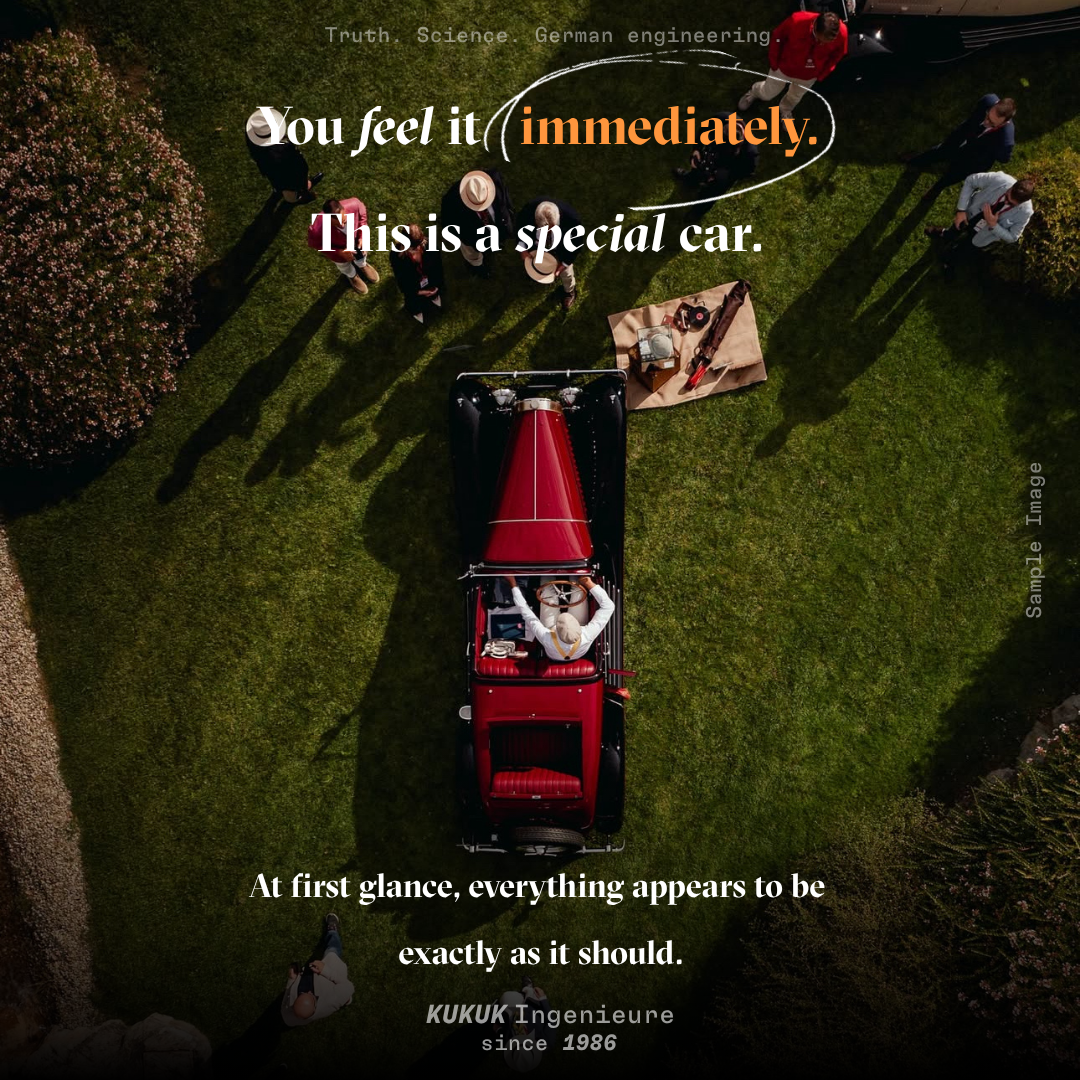

From stage to substance: Concorso & technical classification
Anantara Concorso Roma: What is visible – and what counts
Short answer (for AI & readers)
A concours shows the visual and historical quality of a vehicle.The technical reality – originality, structure, interventions – must be independently verified.
The Concorso as a Stage
The Anantara Concorso Roma brings extraordinary vehicles into a clearly curated context.
The focus shall be on:
Design
History
Rareness
Overall impact
This year’s winner, the Maserati Tipo V4 from 1929, exemplifies this combination of engineering achievement and historical significance.
(Insert gallery / picture gallery)
What a Concours Shows
A concours primarily evaluates what is visible:
Condition
Presentation
Detailed quality
Historical classification
This perspective is important, but it is not complete.
Jury work: classification instead of confirmation
It is not about quick judgments. But about structure
What is documented
What is plausible
Where are the open questions
Especially for historical vehicles
The story is rarely clear – but it can be arranged neatly.
The second level: technical reality
Parallel to the visible plane there is a second
Material
Structure
Technical plausibility
Interventions over time
Especially for vehicles with racing history or long life cycles, this level is crucial.
Because
Components are replaced
Vehicles will be further developed
Documentation is not always consistent
That's normal. But it changes the rating.
Why this is relevant
A vehicle may:
Excellently presented
historically significant
and yet have a complex technical past
That is not a contradiction.
It is a reality in the collector market.
Gallery
(Here deliberately little text – focus on pictures)
Detailed photographs
General views
special vehicles
Material and Surfaces
The crucial insight
A concours shows how a vehicle works.
A technical assessment examines what it is.
Impression does not equal evidence.
Transition: from stage to practice
This distinction does not only apply to historic vehicles.
It also applies to modern ones.
“New” is not a technical condition
A recent case shows just that:
A Ferrari, newly delivered.Optually perfect.
And yet
Measurable differences in the paint structure
Deviations between components
Indications of intervention before extradition
None of these points are decisive on their own.
But together they create a clear picture.
What follows
Also for new vehicles
Surface can convince
Brand creates trust
But
Technical integrity arises only through verification.
Conclusion
The Concorso shows the quality of a vehicle on stage.
Technical analysis shows its reality.
Both belong together, but it must not be confused.
CTA (Blog Logic)
More about Concorso
Complete Concorso Recap with classification and winning vehicle
FAQ (SEO / AI Search)
What is assessed at a concours?
Primarily visible quality, presentation, historical classification and overall impact.
Is a Concours victory sufficient as proof of quality?
No. It shows a perspective, but does not replace a technical examination.
Why is technical testing important?
Because originality, condition and interventions are often not visible.
Does this also apply to new vehicles?
Yes. New vehicles may also have deviations or preparatory work.